
In the silence of the bear, a different kind of whisper carries weight. Venezuela’s request to King Charles for the release of $1.95 billion in gold, frozen at the Bank of England under the shadow of sanctions, is not merely a diplomatic footnote. It is a confession—a confession that sovereign assets, even the most ancient store of value, are hostages to the political whims of the custodians. And in that confession, I hear the echo of every DeFi protocol I’ve ever audited: the fundamental question of who holds the keys.
This is not a story about war or military might. The geopolitical analysis I read dissected the move as a low-cost, high-impact grey-zone tactic—a test of the sanctions regime’s humanitarian exceptions. It framed the request as a narrative battle: Venezuela wrapping itself in the flag of earthquake recovery to shame the West. But looking through the lens of a blockchain architect, I see something else entirely. I see the ultimate proof that centralised custody is a single point of failure, not just for individuals, but for nations.
The Context of a Broken Covenant
Since 2018, the Bank of England has held approximately 31 tonnes of Venezuelan gold, refusing to release it due to international sanctions against the Maduro government. This isn’t a legal theft—it’s a freezing. The gold remains owned by the Venezuelan central bank, but inaccessible. Now, after a devastating earthquake, Venezuela has turned to the symbolic head of state, King Charles, to unlock the asset for humanitarian relief. The move is clever, as the analysis notes, because it bypasses the government-to-government conversation and appeals to a moral authority above politics. But clever doesn’t solve the underlying problem: the gold is not theirs to command.
My code was the covenant, not just the contract. In every smart contract I’ve written, I’ve embedded the principle that the user retains ultimate control. No multisig, no governance vote, no emergency pause should be able to seize assets arbitrarily. Yet here we have a nation-state, with a central bank and a legal system, completely powerless to move its own reserves. The bear market has taught me that value is not what you hold; it’s what you can freely transfer. Venezuela holds gold, but it holds no value.
The Core: Decoding the Sovereign Asset Trap
The technical term for this is ‘custodial risk’. In DeFi, we measure it in basis points—how much can you trust the protocol team not to rug? But for sovereign gold, the risk is absolute. The Bank of England is not a malicious actor; it is a tool of foreign policy. And every country that holds its reserves in Western banks is exposed to the same vulnerability. Based on my auditing experience, I’ve seen this pattern repeated: a protocol claims to be immutable, but a single admin key can drain the treasury. The Venezuelan gold is that admin key, held by the UK government.
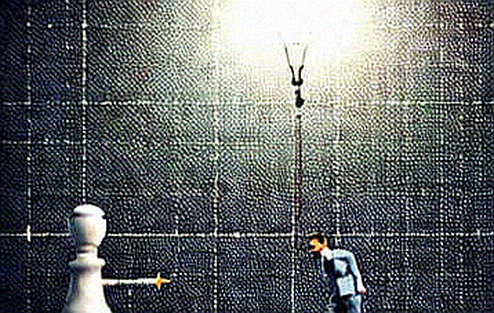
What makes this case particularly fascinating is the use of the humanitarian narrative as a key to the lock. Venezuela is essentially saying, “We will accept your political conditions, but please open the door for the people.” This is the same logic used by DAOs when they argue for treasury diversification—if one asset class fails, the mission fails. But here, the asset class is gold, and the failure is political, not market-based. Every broken token taught me how to hold value. Broken tokens taught me that value is not intrinsic; it is the sum of trust, access, and utility. Venezuela’s gold has none of these right now.
Now, some will argue that this is a reason to embrace Bitcoin—a borderless, censorship-resistant asset that no government can freeze. But that is too simplistic. Bitcoin’s liquidity and adoption are not yet sufficient to replace the $1.95 billion gold reserve of a nation. Moreover, the volatility of crypto assets makes them unsuitable as a sovereign reserve without additional layers of stability. The real insight is not that crypto replaces gold, but that the infrastructure of programmable money can create conditional escrows that are transparent and enforceable by code, not by political decision.
Consider a smart contract that holds the gold token, with release conditions tied to verifiable oracle data (e.g., UN-confirmed earthquake severity) and multi-sig approval from both the owning government and an independent arbiter. Such a contract would make the humanitarian case automatic, removing the need to beg a king. This is the direction that DeFi must take: not just yield farming, but real-world asset management for sovereign states.
The Contrarian Angle: The King’s Silence and Our Inertia
Here is the counter-intuitive truth that many in crypto do not want to hear: the request to King Charles reveals the weakness of the existing system, but it also reveals the immaturity of our own. We preach decentralization, but our largest stablecoins are issued by companies that can freeze accounts. We promote self-custody, but most people still rely on exchanges. Venezuela’s plea is a mirror held up to our own contradictions. We have built protocols that can move billions without humans, but we have not built the trust required for a nation to put its gold in a smart contract.
In the silence of the bear, we heard the truth. The silence is the deafening quiet of the market, where we wait for a catalyst. But the catalyst is already here: a nation is asking for its gold, and no one can give it to them. The contrarian angle is that this event will not accelerate crypto adoption; it will instead reinforce the status quo, as Western governments use the ‘humanitarian argument’ to justify making exceptions, thereby preserving the current system. The real change will come slowly, not from a dramatic freeze, but from hundreds of small decisions by treasuries to diversify into digital assets.

Furthermore, this event highlights a blind spot in the Layer2 debate. While we argue about data availability and rollup scalability, the real bottleneck is sovereign asset mobility. A rollup that can process 10,000 transactions per second is useless if the base layer of value—national reserves—is still stuck in Bank of England vaults. The data availability layer is overhyped when the data itself is frozen. We need to focus on the infrastructure that allows nations to program their reserves, not just users to trade jellybeans.
The Takeaway: Building the Sanctuary
I launched my community, The Commons, because I believe that the future of value is not in the hands of kings or politicians, but in the hands of code that is transparent, auditable, and immutable. Venezuela’s gold will likely remain frozen. But the lesson is not lost: every sovereign nation should ask itself, “Who holds the keys to our reserves?” The answer should be a smart contract, not a foreign central bank.
We build in the noise to find the signal. The signal here is that trust is compiled, not claimed. Venezuela has claimed a right to its gold, but the trust required to release it is not there. We, as builders, must compile new trust—trust that is verifiable by anyone. The next time a nation needs to respond to an earthquake, it should not have to write a letter to a king. It should simply broadcast a transaction. That is the world we are building, and the silence of the bear is the perfect time to lay its foundations.
Faith without verification is just hope. Venezuela’s hope is pinned on a human king. Ours is pinned on code that never sleeps. The question is which one will deliver first.